A nonprofit association founded in 2008Seoul, Republic of Korea

International Education Exchange Association

Education
across borders

From our base in Seoul, we work with universities, hospitals and industry partners to give students in Korea a wider choice of where to study and from whom to learn.

SeoulUlaanbaatar · mnums.ac

Education in practice

In the field

Partnerships in practice
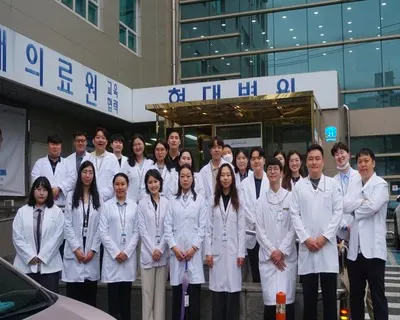
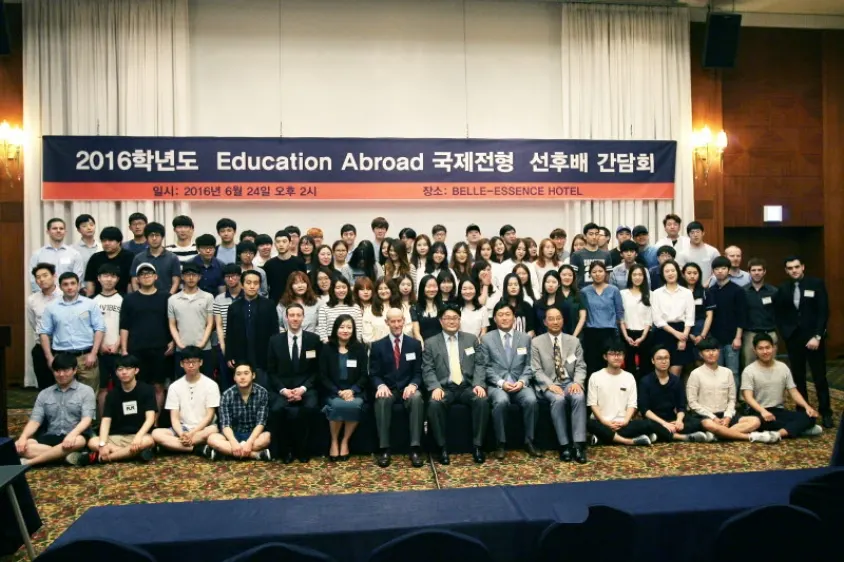
Students and alumni gather for a group photo.
1 / 4

The association

Choosing a profession,
then a place to study.

For IEEA Chair Lee Jong-yeol, choosing a university begins with an earlier question. What work does a student hope to do? The answer can point to a particular teacher, a course or a place to gain experience.

The chair’s perspective
  1. Access to education

    Every student deserves the opportunity to discover what they can do in a field that interests them.

  2. Independent judgement

    Students gain independence as they learn to make decisions and take responsibility for them.

  3. Professional knowledge

    Working with teachers and practitioners in different countries gives students more than one perspective on their profession.

  4. Public service

    The knowledge that sustains a career can also improve the lives of patients, colleagues and neighbours.

IEEA since 2008

Founded in Seoul in 2008, IEEA has three institutes devoted to academic guidance, career development and international higher education.

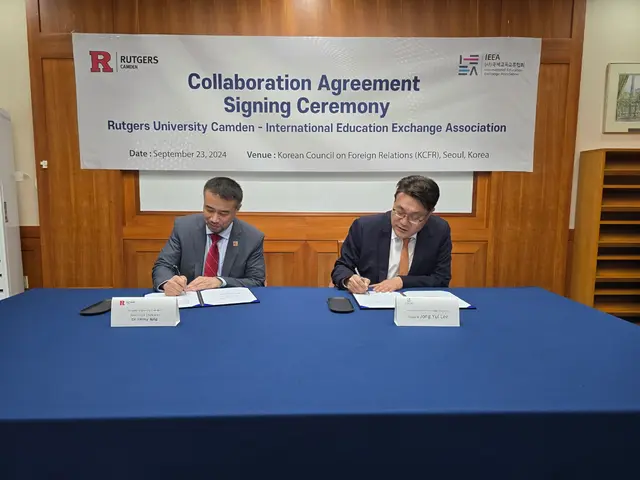
Our agreements with Georgia State University in 2015 and the Mongolian National University of Medical Sciences in 2018 gave that work a foothold in two different education systems. In 2024, Rutgers University–Camden joined our university partners.

Education and careers

Routes into the professions

A university, a teaching hospital and an airline each have something different to offer a student. Our partnerships reflect the particular demands of each field.

Academic English and study abroad

PEAP’s 1+3 university route combines academic English with introductory college courses. Students learn to follow an argument in a seminar, frame a precise question and explain their own reasoning. PEAP also offers a 3+2 route for secondary school students.

Will a course taken abroad count towards my degree?

The university receiving the credit reviews each course under its own rules. Before choosing a course, ask that university how it will assess the credit.

Credit transfer in the IEEA guide

Choosing a medical pathway

Path to Physician covers medical study abroad, including the MNUMS English Medical Program. New Tokyo Medical College begins with basic sciences on Pohnpei. IEEA’s US premedical routes begin at undergraduate level. Where a student studies also matters when they later apply for a medical licence.

School recognition, licensing and admissions
Full programme directory

Education in practice

Partnerships in practice

All association news

IEEA Columns

Essays on the choices students make, the work of teaching and the responsibilities institutions share across borders.

Earlier columns (27)
Browse all columns

Global health

The public purpose of medicine

Medical education shapes more than the career of an individual doctor. It also shapes who provides primary care, whose questions guide research and which communities have access to both.

The health workforce

Where health workers are needed

11M

Projected shortfall in health workers worldwide by 2030

The World Health Organization (WHO) includes doctors, nurses and other health workers in this estimate.

WHO | Health workforce ↗

K-Medicine and health diplomacy

What Korea can share
through medicine

In December 2025, health officials from Mongolia’s 21 provinces visited Korea. Their itinerary included the Korea Disease Control and Prevention Agency. Later that month, Mongolia’s Ministry of Health and IEEA signed an agreement to establish a Korea office.

For IEEA, exchanges of this kind raise a question of public purpose. Which aspects of one country’s experience can a colleague in another country put to use? The answer rests with the people responsible for care in each community.

Watch and listen

Voices from the field

Physicians, researchers and educators discuss the communities they serve and the questions that guide their work.

7 videos

Primary health care: Bringing health services closer to communities

World Health Organization (WHO)

Primary care close to home

WHO looks at how communities help decide which services they need and who will provide them.

Summary and timestamps

A local health team can offer prevention, treatment and follow-up in a place people already know.

Timestamps: 0:03 · 1:15 · 1:37

Primary health care: Bringing health services closer to communities

WHO | Primary health care ↗
Watch the original video ↗
No one should die because they live too far from a doctor

TED · Raj Panjabi

How health workers reach remote villages

Raj Panjabi describes the training, equipment, supervision and pay that community health workers need.

Summary and timestamps

A health worker who can count on a salary and a supervisor is better placed to keep caring for neighbors.

Timestamps: 4:25 · 6:42 · 14:13

No one should die because they live too far from a doctor

TED | Raj Panjabi, 2017 ↗
Watch the original video ↗
Bending the Curve: Advancing Health in Africa through Science and Innovation

Gates Foundation

Who sets the research questions in Kenya?

Kenyan clinicians and researchers discuss the evidence they need in everyday practice.

Summary and timestamps

Local teams can lead studies on the patients they see and put the findings to use in their own clinics.

Timestamps: 1:52 · 3:05 · 9:44

Bending the Curve: Advancing Health in Africa through Science and Innovation

Gates Foundation | Advancing health in Africa ↗
Watch the original video ↗
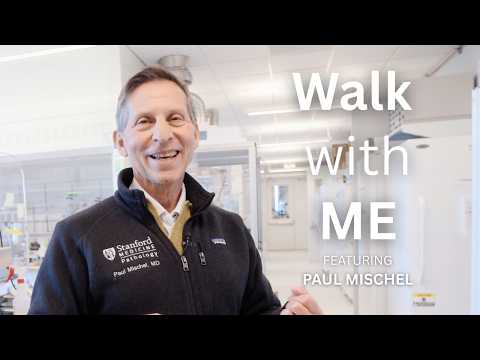
Walk With Me: Paul Mischel, physician-scientist studying cancer evolution

Stanford Medicine

Why a doctor chose cancer research

Stanford’s Paul Mischel talks about his work on cancer and the mentors who helped him get started.

Summary and timestamps

A doctor can bring a question from the clinic into the lab and learn how to investigate it.

Timestamps: 0:01 · 0:26 · 1:39

Walk With Me: Paul Mischel, physician-scientist studying cancer evolution

Stanford Medicine | Walk with me, 25 February 2026 ↗
Watch the original video ↗
The Man of Action 이종욱, 국제보건 20년의 여정

KOFIH-Tube · 한국국제보건의료재단

Lee Jong-wook’s legacy in global health

This film follows the Korean doctor’s work in international health and the fellowships that continue in his name.

Summary and timestamps

Training gives colleagues in different countries a way to stay in touch and keep learning from each other.

Timestamps: 3:02 · 5:48 · 6:19

The Man of Action 이종욱, 국제보건 20년의 여정

KOFIH | The Man of Action, 5 March 2026 ↗
Watch the original video ↗
Our work in Korea · British Council Korea corporate video

British Council in Korea

What the British Council does in Korea

The British Council looks back on its work in language teaching, education and cultural exchange.

Summary and timestamps

A shared language gives students and teachers a way to build a relationship that can last beyond a visit.

Timestamps: 0:06 · 0:46 · 1:08

Our work in Korea · British Council Korea corporate video

British Council | Our work in Korea ↗
Watch the original video ↗
Building HWF for PHC Part 1: Do we have the health workforce to deliver on primary health care?

WHO Regional Office for the Western Pacific

Who will staff the local clinic?

WHO brings together people who train and support primary care teams, including teams in underserved areas.

Summary and timestamps

Training places are one part of the picture. Rural clinics also need funded jobs and working conditions that help staff stay.

Timestamps: 18:25 · 53:52 · 1:02:39

Building HWF for PHC Part 1: Do we have the health workforce to deliver on primary health care?

WHO | Health workforce ↗
Watch the original video ↗

Each film links to its original publisher. The accompanying notes draw on the published descriptions and captions, some of which are automatically generated.

Enquiries

Contact the association

We welcome enquiries from students and families considering a course of study, and from institutions interested in teaching, research or professional exchange.